(2026-08-20 追記)記事をAIが要約した音声解説(Gemini Notebook)を追加しました。ポッドキャスト風にお聞きください。
(2026-08-09 追記)今回の見学ツアーの振り返りを動画にまとめました。地図アプリを見ながら一緒に旅する感覚でどうぞ。
(2026-07-19 追記)今回の見学ツアー体験をレポートしました。こちらもよかったらご覧ください。韓国DMZツアー - たった50km以内に同居する華やかさと緊張
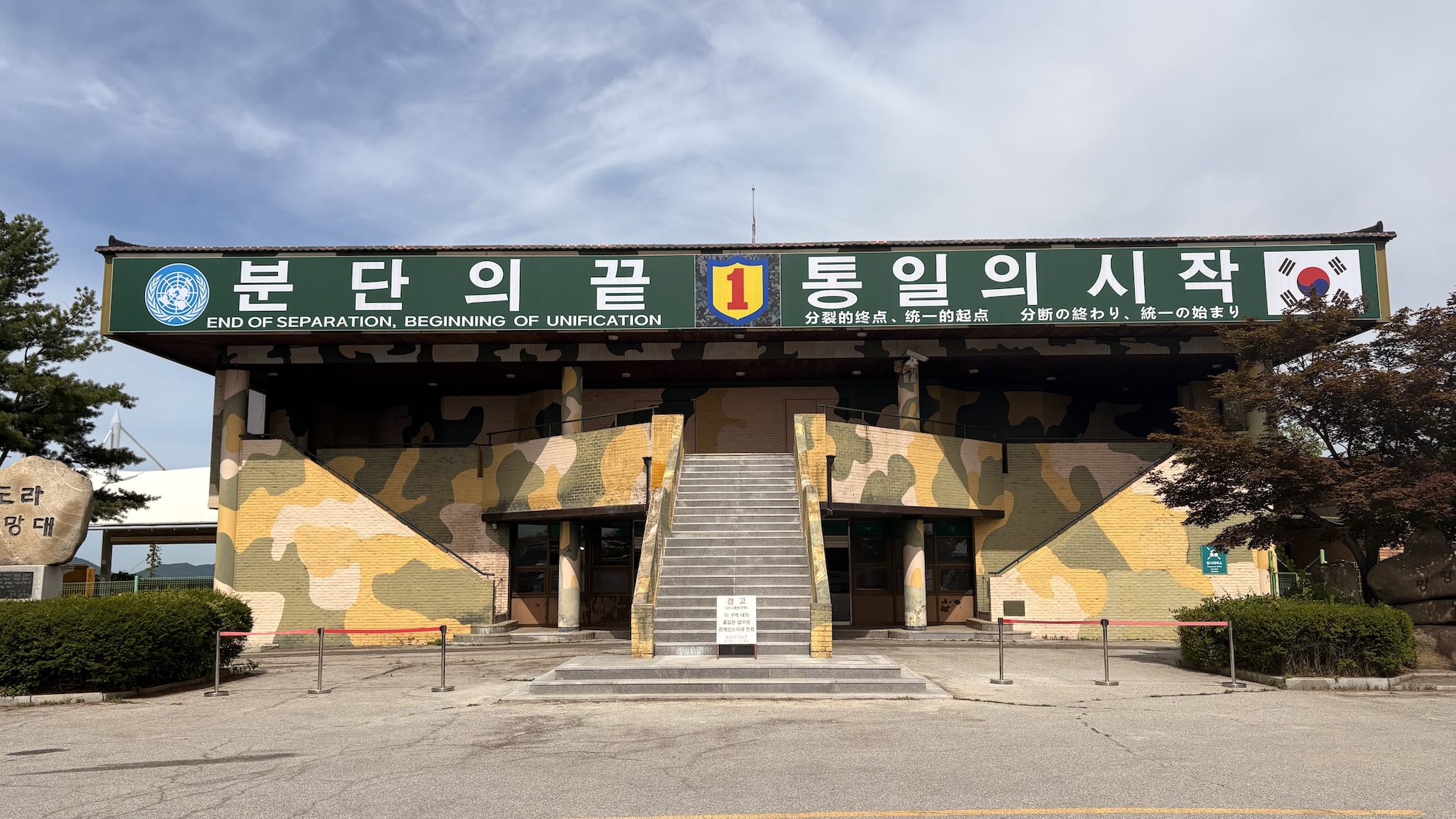
韓国と北朝鮮との軍事境界線周囲にある非武装地帯(DMZ)のツアーに参加してきた。
前から気になっていたのだが、韓国ってエンタメ、グルメ、ファッション、美容など人気の発信地、なのにソウルからたった50km程度の場所に戦争の前線(正確には休戦中、軍事境界線だが)があり、地図で見たら想像していた以上に近いことがわかる、なんだこれは!と驚く。
華やかさと緊張がこんなに近い不思議さは、日本にいるとなかなか実感が湧かない。
これは「旅レポ」ではなく、人間が引く「線」について考えさせられたことだよ。
Index
- DMZで見たもの
- 草は知らない
- 正義はゲーム
- 気づいたのは私のほう
- 草にはなれない
DMZで見たもの
監視等、鉄条網、地雷の注意表示など、民間人出入統制区域は緊張感があるその一方で、その先には何とも穏やかな73年間手付かずの自然が数キロ先まで広がっていて広大!虫や鳥、草木や河はここで何が起きて緊張しているのかなんて全く気にしないような、ごくありふれたどこにでもある自然そのもの。
草は風になびいてフラフラとなすがまま、何にも遠慮することもなく、地球の一部である以外「何をそんなシリアスなカオしてんだ?おまえら」みたいなそんな感じ...優雅だ。
双眼鏡で北朝鮮の人々の生活をのぞき見してみた。自分が逆の立場だったら「何見てんだよ」って感じでなんだか嫌だろうなあ、、、と思いながらも。でも激しく睨み合っているというよりも、なんだかのどかな田園風景、畑仕事をしたり自転車やバイクで農道を走って...北朝鮮・開城市の人々のの〜んびりした光景が広がっていて、戦争中とは思えない。生活感すら感じられたほどだった。
ただそうは言っても私が見た北朝鮮の人の数は少なく、その上空の鳥がこれまた優雅に飛んでいた。そして鳥もまた「は?なに見てんだ?」と言っているかのように、人間にはないかなり優雅な軍事境界線の越境をしていた、もちろん撃たれない。
草は知らない
長年人が立ち入ることがないDMZは自然で溢れていて、人間界にドンパチが起ころうがお構いなしにここでの草木や虫たちはいつも通りの生活を営んでいる。大雨や嵐のような自然の猛威に逆らおうともせず、痛みや苦しみ、さらには死をも受け入れることに抗おうとしない。彼らは軍事境界線という人間が勝手に引いた線をまたいで生きている。自然には境界線も分断もないわけ。
そりゃそうだ...。草は、自然は、地球は、はたまた宇宙は、線なんて知らない、知ったこっちゃない。
正義はゲーム
境界線なんて人間が善悪や正義を主張するゲームであって、自然界からすると最初っから非武装地帯に住む虫も鳥も草木もそんなゲームには参加してない。
線を引いた人間側の内側でしか存在しない線。そんなもん、草も虫も風も73年間、ゲームの外から「知ったことか」と。
善悪、正義、境界線...そんなものは実体がないのはあの偉大なブッダが仏教を通じて「空」として教えてきたこと。人間が名前を付けてあると思い込んでいるだけ。草や動物はその名前を知らない、それでいて自由。非武装地帯は人間のゲームを73年間拒絶し続けてきた場所なのかもしれない。
気づいたのは私のほう
分断を感じていたのは私のほう...DMZの自然は何も語らずただそこにあるだけ。(冒頭伝えたとおり)最初はエンタメ等の発信地とDMZの距離の近さで不思議な感覚だったけど、本来そんな感覚すら無意味であって、自然はその問題に関わろうとしていなかった。
人間と比べると草や自然の意識は(もしかしたら草にも意識があるかもしれないが)かなり薄いんだろう。だから分断なんて感じなくても良い。 そういう数kmの分断された自然を分断と感じない草や動物を見て、「あ、勝手に作られたゲームに参加させられている」と気づく。
草より高い意識がある人間であることの代償が、ゲームへの強制参加って皮肉というかなんというか。
まあ、私が人間のつくったゲームの中にいただけなんだろう。そんなことにも気づかなかったなあ...。
草にはなれない
人間は意識が高い生き物、だから線を引く。
私たちの身の回りにもある、仕事、人間関係など。もっと広いところでは国籍、宗教、政治でもそれぞれの解釈で線を引く。また人間は知らないうちに誰かが引いた価値観のゲームに参加させられている。そこに気づきにくいのは、それがあまりにも日常的に「社会人として」「大人として」「人として」と常識がどうたらと植え付けられてきたからで、「こうあるべきだ」みたいな主張が強い実家の家族と今でさえモメる私がいる、そうなのだ、みんなそれぞれ善悪の線を引きたがる。
多分、DMZは「同じ民族」「同じ家族」といった極端な背景に考えさせられたのかもしれない。
DMZに生息する草になることはできないけど、人間が引いた線に気づくことができる、それによってゲームの外に触れる気がする。
I joined a tour of the DMZ — the Demilitarized Zone along the military demarcation line between South and North Korea.
I'd been curious about it for a while. Korea is a powerhouse of entertainment, food, fashion, and beauty — one of Asia's most vibrant cultural exports. And yet, just 50km from Seoul, there's a front line of a war that technically never ended. (Technically, it's a ceasefire. A military demarcation line. But still.) Looking at a map, I was struck by how close it actually is. That gap between glamour and tension — it's hard to feel from Japan. You have to stand there.
This isn't a travel report. This is about the lines human beings draw.
What I Saw at the DMZ
Guard towers. Barbed wire. Signs warning of landmines. The civilian control zone has a weight to it.
But just beyond all of that — stretching for kilometers — is nature. Undisturbed for 73 years. Insects, birds, grass, rivers: completely indifferent to whatever has been happening on the human side of things. Just ordinary nature, doing what nature does.
The grass sways in the wind, unhurried, unbothered. As if to say: "What are you all looking so serious about?" Honestly, kind of majestic.
I peered through binoculars at life on the North Korean side. I thought: if the roles were reversed, I'd hate being watched like this. But what I saw wasn't a scene of hostility — it was almost pastoral. People working fields, riding bicycles and motorbikes along rural paths. The everyday life of Kaesong, just... going on. It felt strangely normal.
Above it all, birds flew. Crossing the military demarcation line with total ease. No one shot at them.
The Grass Doesn't Know
The DMZ has been off-limits to humans for decades. Nature has moved back in completely. Whatever conflict has raged on the human side, the insects and birds and plants have simply gone on living. They don't resist storms. They don't fight death. They accept what comes.
And they cross the military demarcation line without a second thought, because to them, it doesn't exist.
Of course it doesn't. Grass doesn't know borders. Nature doesn't know borders. The Earth doesn't. The universe doesn't.
Justice Is a Game
Borders are a game — a game humans play to argue about good and evil, right and wrong, whose side is just.
The insects, the birds, the grass: they never signed up for this game. For 73 years, from outside the game entirely, they've basically been saying: "Not our problem."
This is something the Buddha pointed to with the concept of śūnyatā — emptiness. Good, evil, justice, borders: these things have no inherent existence. They're names humans gave to things, and then decided were real. The grass never learned those names. And so the grass is free.
The DMZ may be the place that has most quietly, most stubbornly, refused to participate in the human game — for 73 years running.
I Was the One Who Noticed
The division I felt? That was mine. The DMZ's nature said nothing. It was just there.
At first, what struck me was the strangeness of proximity — all that cultural energy of Seoul, and 50km away, this. But nature had no opinion on that strangeness. Nature wasn't involved in the problem at all.
Maybe grass has some form of consciousness — but it's probably far thinner than ours. Thin enough that it doesn't register division. And standing there, watching animals cross a boundary they couldn't perceive, I had a strange thought: "Oh. I've been playing a game someone else made up."
That's the cost of being human — of having the kind of consciousness we have. Mandatory participation in the game.
I'd just been inside it, without realizing it.
I Can't Become the Grass
Humans draw lines because we're conscious enough to draw lines.
We do it everywhere: work, relationships, family. Wider: nationality, religion, politics — each with its own interpretation of where the line belongs. And often, we're playing games we didn't choose, living inside value systems handed to us so gradually — "this is what adults do," "this is what society expects" — that we never noticed we joined.
I still argue with family members who hold very firm lines about how things should be. We all do this. We all draw.
What made the DMZ hit differently was this: the people on both sides of that line share the same ethnicity. The same ancestors. Before the peninsula was divided in 1945, they shared the same land, the same language, the same families. Families were separated by a border drawn by geopolitics, not by the people who lived there. The line was made for them, not by them.
And still — both sides hold their own justice. Both sides are certain they're right.
I can't become the grass. But I can notice the line. And maybe — just maybe — noticing it is the first way to touch something outside the game.
That's what the DMZ felt like to me, I think.